Angkor Wat, considered the largest religious monument in the world, is an unavoidable element of Cambodia’sidentity and is even represented on the country’s flag. This UNESCO World Heritage Site, with an area of 200 km2, is a wonderful “world” full of old temples, true “treasures” scattered in a jungle with which they blend. But this is what we think.

Angkor Wat has a shifting history. Lost in the rainforest for centuries, its ruins are the remains and evidence of the grandeur of the Khmer empire, which had Angkor as its capital. Today it is one of the most visited places in Southeast Asia and the world, being a must go even for those visiting neighboring Vietnam and Thailand.
The construction of this complex began in the ninth century and flourished until the fifteenth century. The man to blaim would have been King Suryavarman II, the self-proclaimed “universal king,” who fostered the building of the city as one that would become the capital and epicenter of his empire. It has become a prosperous city that was probably the largest of the preindustrial period, with about half a million inhabitants. Originally Hindu, it was converted to Buddhism through a history rich in transformation and conflict. In its decline, problems with the water supply system eventually determined a shadowy fate. The city was consumed by the forest and forgotten for centuries.
But eventually it was reborn to the world and to tourism, being one of the most fantastic places we know. It is a vast complex, full of surprises and treasures, undoubtedly one of the wonders of the world. And the best way to visit this ancient city, which is just 5 kms from Siem Reap, is by bikeor scooter, or even walking.
For this we must set aside two or three days to explore the trails that rip the forest and lead us to the ruins of which Angkor Watis part. Ruins of which it is part? !! Shuffled?! Actually Angkor Wat, the temple, is just one among the thousand temples that made up the ancient city of Angkor. That was the name the city. It turns out that the size and popularity of the main temple has made everything around it known by its name, Angkor Wat.
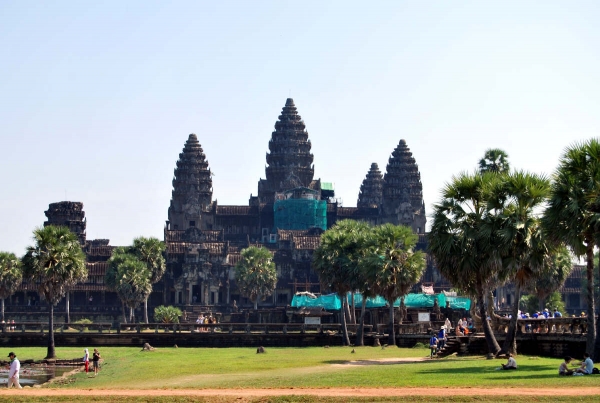
The main temples of Angkor Wat
Angkor Wat
It is the largest, the main temple and the one that best withstood the passage of time. Considered the largest religious structure in the world, it was the epicenter of the empire in governance and spirituality. Its name means precisely that: Angkor means capital and Wat means temple.

It consisted of the royal palace and a temple dedicated to the god Vishnu, also symbolizing Mount Meru, like many other temples in Southeast Asia. It is estimated that in its perimeter there were about twenty thousand inhabitants.
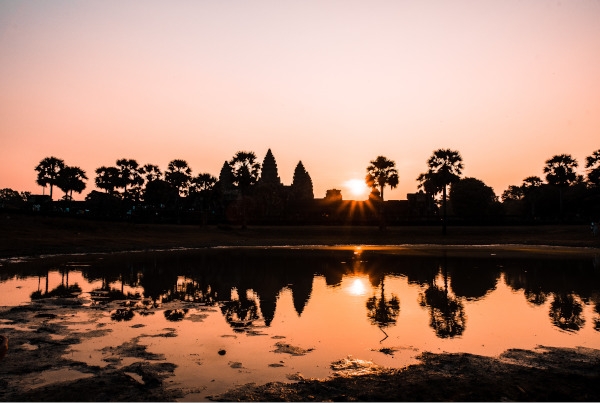
Beyond the majesty of the temple, where we can ramble for hours while admiring the building, its sculptures and prints, the Angkor Wat sunrise comes as one of its greatest appeals. Thousands of people converge on the shore of a lake, in front of the temple, to witness the colors and reflections of a memorable phenomenon.
The only point against this program is “just” the thousands of people that can not escape from. We have to be at the ticket office at5 am if we want to find a good seat. This means waking up around 4 am, leaving Siem Reap around 4.30 am.
Bayon Temple
The Bayon temple is one of the most popular and not only because of its large size. Situated in the center of Angkor Thom, whose meaning corresponds to the great capital. The temple itself has as its particularity the many imposing statues that populate it. In any direction we look, we find a magnificent work with over 1000 years of history.
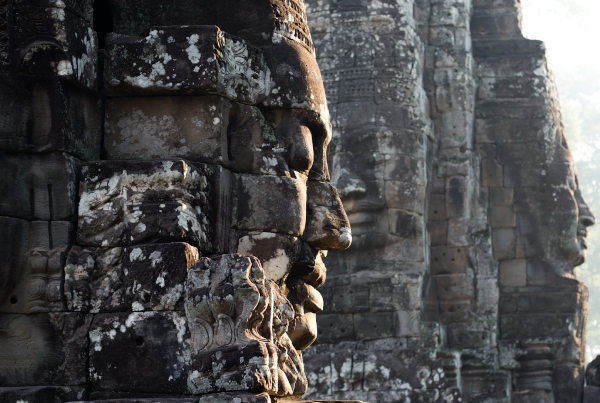
These are massive images that decorate the towers of the temple’s highest level, each of which has four faces. Built by King Jayavaram in the early 12th century, it underwent alterations at different times according to Hindu and Buddhist beliefs.
The best time to visit will be early, while the large crowds are still at Angkor Wat watching the sunrise. Making the Bayon Temple the first or first stopping point will be a good idea for one of the days. Either way, whether or not this is the option, Angkor Thom is only 3 kilometers from Angor Wat, about 5 minutes by scooter, 15 or 30 by bike, depending on the pace, but quite close.
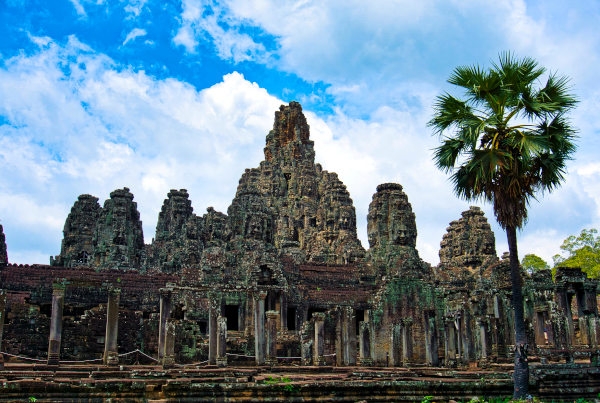
Ta Prohm Temple
This temple shares the style and is of the same height as the previous temple, having been built as a Buddhist shrine and university. It is distinguished among the generality of the temples of Angkor Wat because, after its rediscovery, it was kept practically as it was found.
In Ta Prohm it is noticeable why it was possible for something of Angkor’s dimension to be lost and forgotten in time. We will find ruins consumed by the roots of large trees, which are no longer separable. It is an indescribable scenario but may even be familiar. Those who have seen the movieTom Rider, which was recorded there, should recognize the scenario.
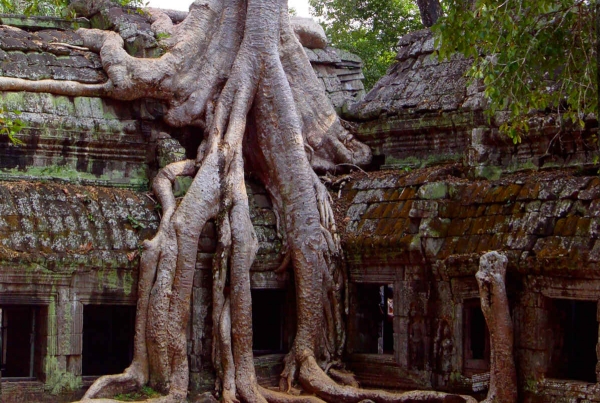
Being one of the most popular in the whole complex, it should be visited between7 am and 8 am to avoid large crowds. If we have three days to explore everything, this should be, along with sunrise and the Bayon temple, one of the starting points.
Ta Prohm is 6 kms from Angkor Thom and 7 kms from Angkor Wat, about 10 minutes by scooter.
3 day itinerary in Angkor Wat
There are dozens of temples with appeals that justify a visit, and it is difficult to indicate which are the best, because it will depend a lot on what each one looks for. Whether we are looking for more imposing and popular touristic temples, or temples with less people. more exclusive and relaxed athmosphere.
Still we will list the main ones in a 3 day itinerary in Angkor Wat. We divided the most popular temples into three groups according to their proximity. However, consistent with the suggestion to visit the top and busiest when there are fewer tourists, we make one or another exception to this rule.
If we decide to hire a guide, we should try to set the route to avoid walking with the crowds.
Day 1 itinerary
We started the day around 4 am so we could get into the temple around 5 am. This is the best way to ensure a good place to watch the crowded sunrise. We are looking for a place near the lake for the best view possible. After sunrise we will visit the temple, which unfortunately will be overcrowded.
From there we go to the Ta Prohm Keltemple which is 1.2 kms, a 10 minute walk. It is a small ruin of a sanctuary that is worth stopping to see because it is right next door, on top of our path.
Baksei Chamkrongis one and a half kilometers from the previous temple. On foot we took about 15 minutes, by bike about 5 and even less scooter.
This relatively tenth-century shrine, which was relatively structured, was dedicated to Shiva and was originally Hindu.
Despite being near the entrance to Angkor Thom, given that the sunrise crowd is heading there, we reversed the direction we left the Angkor Tom and Bayon temple for early the next day.
Just 500 meters away, we find the next stopping point, the 9th century Phnon Bakheng. The image of the previous temple is also dedicated to Shiva but, At some point in its history, it will have been converted to Buddhism. This temple, which sits on top of a small elevation, is said to have the shape of a mountain and is very popular when the sun goes down.
Now that we have reversed to escape the crowd, we jump into another area of the complex. We make 8 km, which takes about 10 minutes by scooter or tuktuk and a little more by bike, to reach the Kravan temple. These 10th-century ruins consist of 5 reddish towers.
After Krava we stopped 2 kms away at the Banteay Kdei temple. It is just 5 minutes by scooter and a little more by bike. It is a 12th century Buddhist temple, not unlike the popular Ta Prohm.
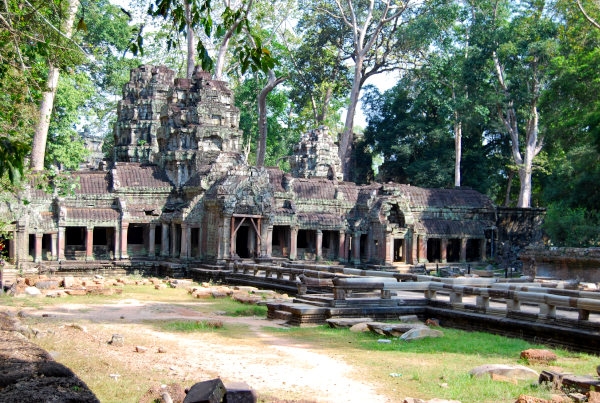
Right next door, less than 1 km away, we find Srah Srang. It is a huge reservoir of water, excavated in the tenth century, and guarded by the surrounding forest and two small lion statues.
Day 2 itinerary in Angkor Wat
The second day should start early. Enjoy while everyone watches the sunrise and visit the most popular temples, yet no tourists.
So we start with the famous Ta Prohm, known for the tree that embraces a ruined temple and for being the setting of one of the Tomb Rider films.
We can enjoy a bit if we arrive around 8pm, but we shouldn’t waste too much time getting to the Bayon Temple before 7.30am.
Ta Keo is a temple built in sandstone that imposes itself by its height. Built in the tenth century, it has several floors and 5 towers that functioned as temples. Without a doubt it is worth while as we travel from Ta Prohm to Angkor Tom, stop for 10 minutes to climb to the top and enjoy the surroundings.
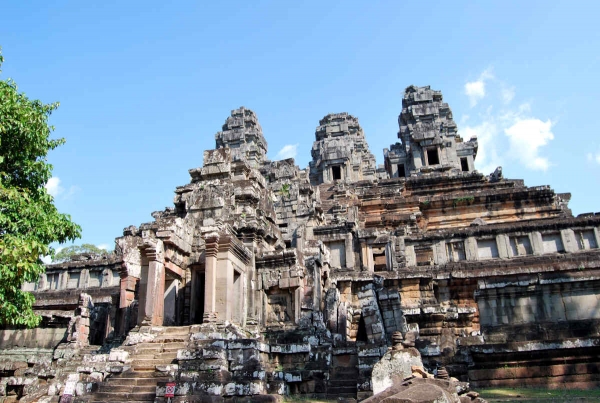
It is less than 2 kms from Ta Prohm, less than five minutes by scooter, and a little more by bike.
The next stop, less than 1 km away, is the Thommanon Temple. This Hindu temple, which precedes the entrance to Angkor Tom, dates from the 12th century and is relatively well preserved. It’s a place not to waste too much time … Just to take some pictures …
500 meters later, on our way to the Bayon Temple, we pass Victory Gate, a beautiful structure that marks the entrance to Angkor Tom, and deserves some good photography.
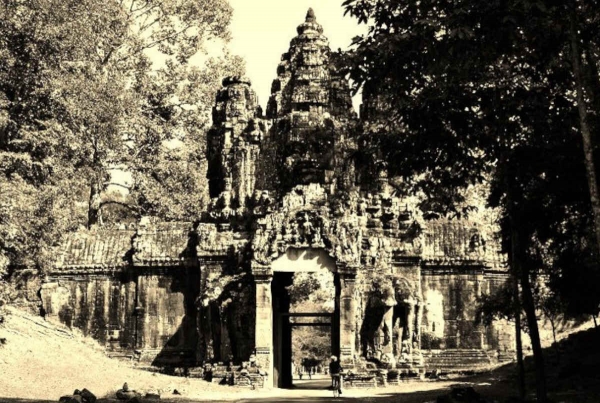
From there we ran to the Bayon Temple, even before the large crowds arrived. It means it’s not yet 7.30am and we can enjoy the famous statues that point in all directions.

Baphuon is one of the large temples on the perimeter of Angkor Tom. This 11th century structure will be the first stop after the Bayon temple. It is about10 minutes walking and much less by bike or scooter.
It is an imposing temple, with several levels, which raise it to 25 meters high. It is one of the religious structures in Angkor Wat that represent Mount Meru, the “abode of the gods” In addition, it will have been a place of worship of Shiva.
Beside it is a large lake which, if it is between us and the temple, invites a beautiful photograph.
Less than 5 minutes away we find Phimeanakas. It is a large temple, shaped like a pyramid, that rises from level to level. It is believed to have been of great importance and often used by royalty.
Then we followed another 750 meters and found Prasat Suor Prat, a dozen towers lined on one side of the royal square. Built in sandstone, they are situated near the Terrace of the Elephants and the Terrace of the Leper King. They are known as the tightrope dancer towers and who they are is not the origin of slackline.
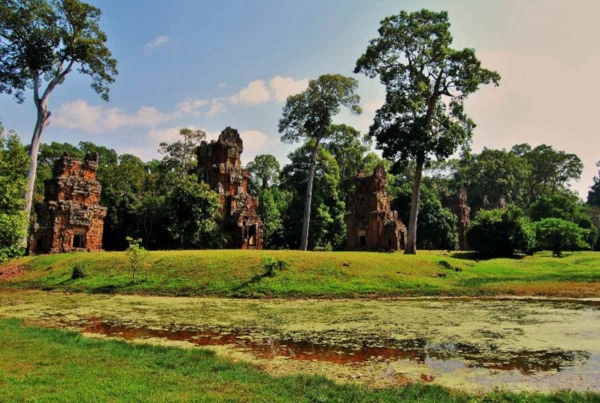
At 270 meters, within the perimeter of Angkor Tom, we find the Terrace of the Elephants. It is a stage from which the king watched military parades and other major events or ceremonies. The 350 meter structure is very ornate and the main motif or highlight, of course, is the elephant. It’s worth stopping by and taking a look.
O Terrace of the Leper King está muito próximo às duas anteriores paragens, a cerca de 100 metros da última. It was built at the height of the Bayon temple, sharing its architectural style. It is worth going through this place to appreciate the way the stone was crafted.
The name by which it is known is related to a statue that was found at that location. This, about 5 centuries newer than the Terrace of the Leper King, by wear and erosion, appeared to represent a leper man. It is also associated with the legend of a king who would also be a leper.
Preah Pithu is set of ruins of 5 temples. The structures are beautiful, most of them in Angkor Wat, with the stone very well crafted. However, what makes this place interesting is the tranquil atmosphere and without the crowds of other temples. Passing by there is likely to find some monks.
Day 3 Itinerary in Angkor Wat
The third day, which will start in East Mebon, will be more relaxed, with more time to enjoy the less beaten trails and get off the set route.
The starting point is a large, 10th-century temple at the eastern end of the complex. Originally surrounded by a now dry water reservoir, it is dedicated to Shiva, where the well-preserved towers and a beautiful image of an elephant stand out.
The second stop is Ta Som, which is about 2.5 km away and takes less than 10 minutes by scooter, a little more by bike and about 20 minutes to walk well.
It is a 12th century temple that has not been completely restored, resembling the popular Ta Prohm. In this sanctuary, located northeast of central Angkor Wat, we can find the emblematic trees that grow embracing the ruins. The big advantage is the number of tourists who visit it, relatively small in the general context of the historic park.
Another 2 kms and we find Neak Pean, an artificial island with a Buddhist temple. This was used as a hospital and for therapeutic purposes. Hindu mythology and beliefs, which underlie Buddhism, postulate that the balance between the elements (water, earth, fire, and wind) benefits health.
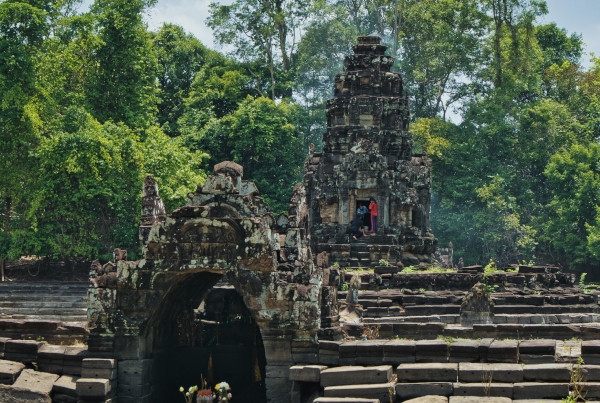
We walked another 5 minutes by scooter, about 10 by bike and found the small Banteay Prei temple. This small sanctuary would not warrant a visit if it were not a slight detour from our route. On the way we will still find, on our left, the little Prasat Prei. Anyway we can enjoy the absence of tourists and enjoy a little tranquility while we record the moment with some photos.
Heading south, less than 2 kms, we find the Preah Kan temple. This 12th century shrine is massive and mixes Buddhist elements in its central temple with some Hindu elements that populate its periphery. It has an architecture similar to Ta Prohm and, in its image, is not completely restored.
A última paragem de este roteiro de 3 dias será Ta Nei. This temple is 2.5 km away, about a 20-minute walk.This temple is among the least visited in Angkor Wat, as it is set back from the main road and needs to travel a short path to get there.
É um santuário budista do século XII, muito recatado e ideal para finalmente parar e desfrutar, sem pressas, do ambiente de Angkor.
From here, if time is left and we still have legs, we can explore the many less beaten paths and areas. Alternatively, if we haven’t explored Siem Reap yet and Ton Le Sap Lake, it’s time!
Angkor Wat Timmings
Most of the temples can be visited between 7.30am and 5.30pm. But there are some that can be visited at other times:
- The Angkor Wat temple and Srah Srang can be visited from 5 am and also close at 5:30 pm;
- Pre Rup and Phnom Bakheng can be visited from 5 am to 7 pm to allow sunrise and sunset views.
Angkor Wat Tickets Price
Tickets to visit the complex are quite expensive but worth the investment. we can choose between a one day ticket and 3 and 7 day passes:
- The daily ticket costs 33 €.
- The 3 day pass costs 55 €,.
- The 7 day pass costs 65 €,
Angkor Wat Tours
Unsurprisingly, Angkor has a very rich history. It’s worth it, if only on one of our days, to hire a guide or tour to help us contextualize and unite the points between so many historical and religious details. Understand the symbolisms and transformations that elevated and destroyed such an advanced civilization.
There are many tours and early bookingcan prevent some last minute surprises, especially when we talk about such busy tourist attractions. Getyourguidemakes it easy to find the best options by reviewing and commenting on each tour, and many allow cancellation until the day before. We can check all the options here and if we happen to book through the Backpackers Bay affiliate link we help the blog without paying more for it.
Dresscode
Given that we are going to visit temples we should, as is customary in Southeast Asia,cover the chest and legs until the knees. On the other hand, we must take into account that from 10 am the heat becomes intense. You should find a solution that respects local customs but is still fresh.
We should wear comfortable shoes as we will spend a lot of time standing, walking and eventually cycling. And finally, bring a hat to protect the head.
Where to stay in Angkor Wat
Aqui não há dúvidas. The best alternative is tochoose a hotel in Siem Reap. Prices start at 2 € per night in acceptable hostage rooms, and range up to the several hundred euros they charge for the many upscale hotels in town.
The city is only 5 kms from Angkor and it is very easy to get there in many ways.
Booking.comHow to go to Angkor Wat
The journey from Siem Reap to Angkor is very short, about 5 kms. You can get there in less than 10 minutes, either bytaxi, tuktuk or scooter. Although negotiable, the price of the first two options will run at 5 €, about 20 reais. Scooter will depend on the rental price we get.
An alternative is to go by bike, which takes about 30 or 40 minutes but is well worth it. We made this trip on one of the days we were there and loved it. It was a dive into the daily lives of Cambodians who, every day, live with crazy traffic and an almost total absence of rules.
Preparing your trip with our affiliate programs is a way to support our project and help it continue to grow. Booking through these programs, whether it’s booking a hotel through Booking, World Nomads insurance, booking a flight, etc., means Backpackers Bay gets a commission, without you paying more for the service you contracted.
The affiliate programs we have selected and referred to below, or in our articles, are credible agents that we use in preparing our own travels and which we believe are among the best options in the travel market.
We hope, with our tips and referrals, to help each reader get even better holidays.
Book your flight with Edreams or Rumbo. Book your hotel with Booking or Edreams Get your travel insurance with World Nomads. Rent your car with Europcar. Find the best tours, anywhere in the world, with Getyourguide.The post Angkor Wat in Cambodia, more than a temple, the symbol of a country appeared first on Backpackers Bay.
]]>Shri Kashi Mandir, also known as Birla temple, is one of Varanasi’s main attractions. The temple was built in 1965 by Raja Birla, a large Indian industrialist. The temple came to be recognized by the name of the man who was in its origin.
The Birla Temple is part of the Varanasi University Campus (BHU) and entry is permitted for any type of person, regardless of caste.
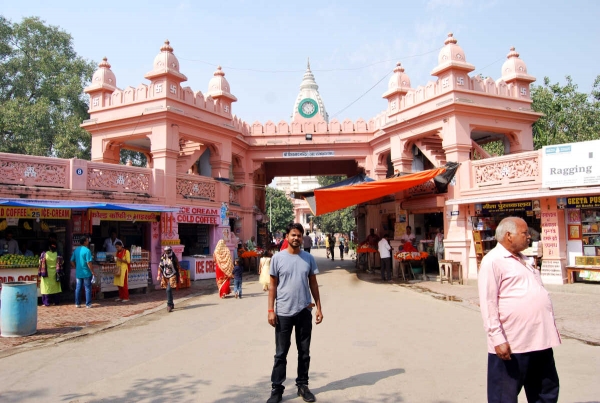
This shrine stands out for its marble construction and the tallest tower of all Indian temples. Dedicated to Shiva, this temple is one of Varanasi’s most visited sites, both by believers and tourists.
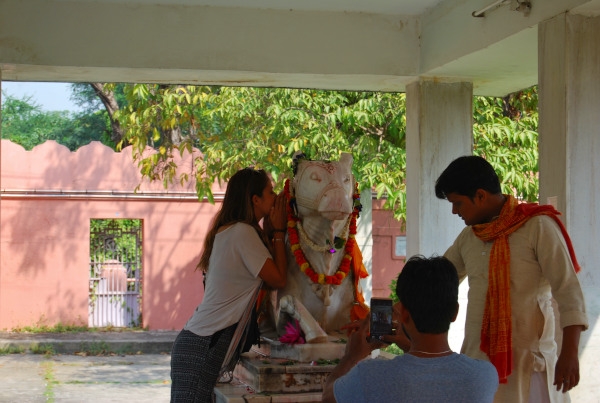
In addition, inside, where photography is not allowed, we can find a setting that makes it a peculiar place. On the ground floor, the temple includes a small altar with the figure of a snake. This statue, with a phallic symbolism, is an object of worship before which women ask and pray for the virility of their husbands or lovers. On the way out we can still find the statue of a cow, to which the believers go to secrete, in the ears, wishes and prayers.
Shri Kashi Mandir entrance fee
A entrada no Birla Temple é gratuita.
Timmings
The temple can be visited between 4 am and noon and between 1 pm and 7 pm.
Location of Birla Temple and how to get there
Birla temple is located on Varanasi University Campus (BHU), 7 kms from Cantt. Railway Station
If we choose to go by taxi, starting from the Varanasi Ghats (Assi Ghat), it is 5 kms away and the trip takes about 10 minutes. As for the price, we can expect an approximate cost of 150 rupees ($2,10 / 1,9 €).
Preparing your trip with our affiliate programs is a way to support our project and help it continue to grow. Booking through these programs, whether it’s booking a hotel through Booking, World Nomads insurance, booking a flight, etc., means Backpackers Bay gets a commission, without you paying more for the service you contracted.
The affiliate programs we have selected and referred to below, or in our articles, are credible agents that we use in preparing our own travels and which we believe are among the best options in the travel market.
We hope, with our tips and referrals, to help each reader get even better holidays.
Book your flight with Edreams or Rumbo. Book your hotel with Booking or Edreams Get your travel insurance with World Nomads. Rent your car with Europcar. Find the best tours, anywhere in the world, with Getyourguide.The post Birla Temple appeared first on Backpackers Bay.
]]>The Akshardham Temple in New Delhi, also known as Swaminarayan, is one of the great postal cards of the city. Opened less than two decades ago, this is a treat for the eyes and the largest Hindu temple on the planet and has become one of the top pilgrimage and tourist destinations in New Delhi and India.
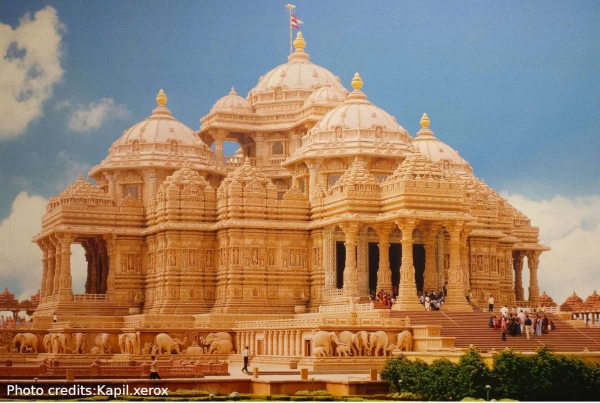
Photo Credits: “Akshardham Angled, Wikimedia Commons by Kapil.xerox, CC-BY 4.0
Dedicated to Swaminarayan, a Yogi, a holy man believed to have been a manifestation and embodyment of the divine, the Akshardham Temple symbolizes, as its name implies, the home of the divine, the eternal.
This magnificent religious complex, which helps us to imagine the splendor of ancient times of places with Angkor Wat, is absolutely massive, filled with sublime architectural details. Composed of temples, gardens, portals, animated by shows and exhibitions, it is easy to get lost for hours while exploring its mystical, almost magical environment, a testament to Indian culture and identity. As we did so, we discovered nooks, footprints of the Buddha, and at an unexpected moment, we ended up sitting in a small shrine, the Abishek Mandap, with a holy man reciting mantras, eventually blessing us with the holy water of the Ganga River.
It is worth taking at least an afternoon or a day to visit Akshardham Temple, with the time and calm necessary to explore and enjoy the different areas and many activities available at the religious complex:
- Mandir is the central element of the Akshardham Temple. Built of pink stone and marble, it has over twenty thousand statues representing Hindu figures, nine domes, 237 sublime-worked pillars. The exterior facade is all a huge sculpture, full of symbolism. It is an absolutely extraordinary space that is intended for the house of the divine and the eternal.
- Sahajanand Pradarshan or Hall of Values is an area dedicated to Swaminarayans life. It dislpays, through sound and video, the events that marked the life of the yogi and moral values that they represent.
- The Nilkanth Kalyan Yatra Room also displays a video that portrays the pilgrimage Swaminarayan began at the age of 11.
- Sanskruti Vihar offers a boat trip on a small artificial river. The banks are full of representations of aspects of Indian culture and history.
- Yagnapurush Kund, a huge water tank, is the stage for the light and water show that takes place at night.
- Bharat Upavan or Garden of India is a vast corridor with several statues on its flanks. These represent various figures of Indian culture and history. The problem is that the info plates are not readable.
- Yogi Hraday Kamal is an extraordinary garden with a strange and unique architecture, close to the eating area.
The dining area has numerous options and a large shady area where we can have lunch or snack quietly.
Akshardham Temple entry fee
Entrance to the complex is free. We only have to pay if we want to see exhibitions or the water and light show.
To see the exhibitions, adults pay Rs. 220 (R $ 11.5 / 2.5 €), seniors (from 60 years) pay Rs. 170 (R $ 9.80 / 2.10) and children (between 4 and 11 years old) pay 120 rupees (R $ 7 / 1,5 €). Children under 4 have free entry.
To watch the water and light show adults pay 80 rupees (R $ 4,6 / 1 €) and children 50 rupees (R $ 2,9 / 0,6 €). Children under 4 have free entry.
Opening hours
The Akshardham Temple is open from Tuesday to Sunday, between 9.30 am and 6.30 pm.
The water and light ceremony takes place after sunset.
We draw attention to the entry process. It is time consuming and it is good to have at least an hour margin for queues and security checks.
Prohibited Items
There are many restrictions on entering the temple, and the following items are not allowed:
- mobile phone and camera;
- electronic devices such as pen’s, headphones, computers and the like;
- Luggage and luggage;
- Food, drinks, alcohol and tobacco.
At the entrance there is an area where we can leave our belongings but, we warn you, is a bit chaotic and the queue can be long. In our case, as we went from there to the airport, we had everything with us. It took some faith that we would not be robbed to enjoy the ride.
How to dress
To enter that place, being sacred, we must wear clothing that covers the shoulders, chest and navel, as well as the arms. From the waist down we should bring pants or shorts that cover to the knees.
If this is not the case, and we are caught off guard, we may request a sarong with a security deposit of 100 rupees, returned at the end.
To enter mandir we have to take off our shoes. At the entrance of the temple there is a place where we can leave our shoes.
Follow us on social
SUBSCRIBE OUR NEWSLETTER
The post Akshardham Temple appeared first on Backpackers Bay.
]]>The post Wat Phra Singh appeared first on Backpackers Bay.
]]>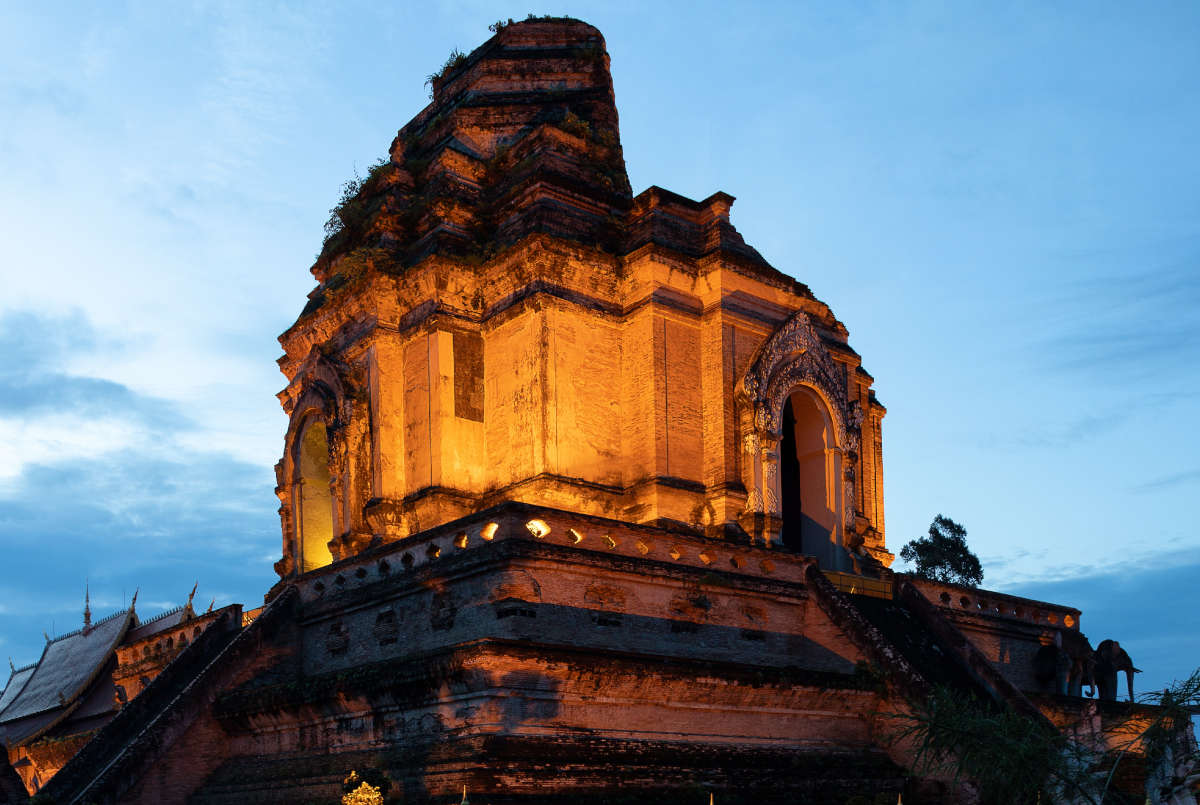
The post Wat Chedi Luang appeared first on Backpackers Bay.
]]>
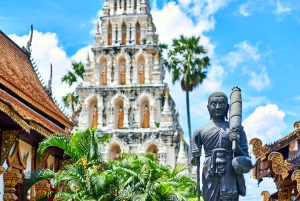

The post Wiang Kum Kam appeared first on Backpackers Bay.
]]>
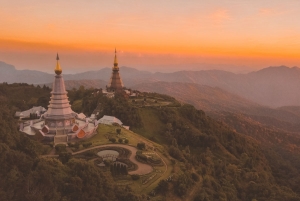

The post Doi Inthanon National Park appeared first on Backpackers Bay.
]]>


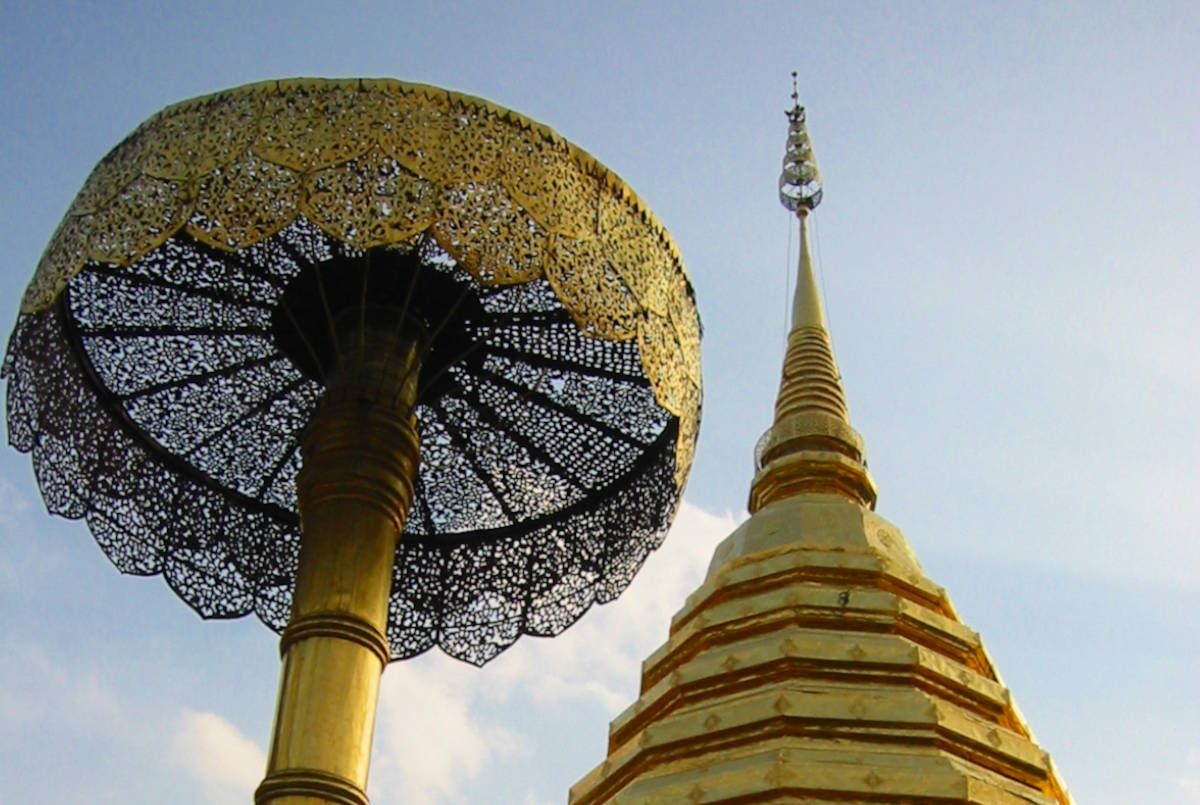
The post Wat Phra That Doi Suthep appeared first on Backpackers Bay.
]]>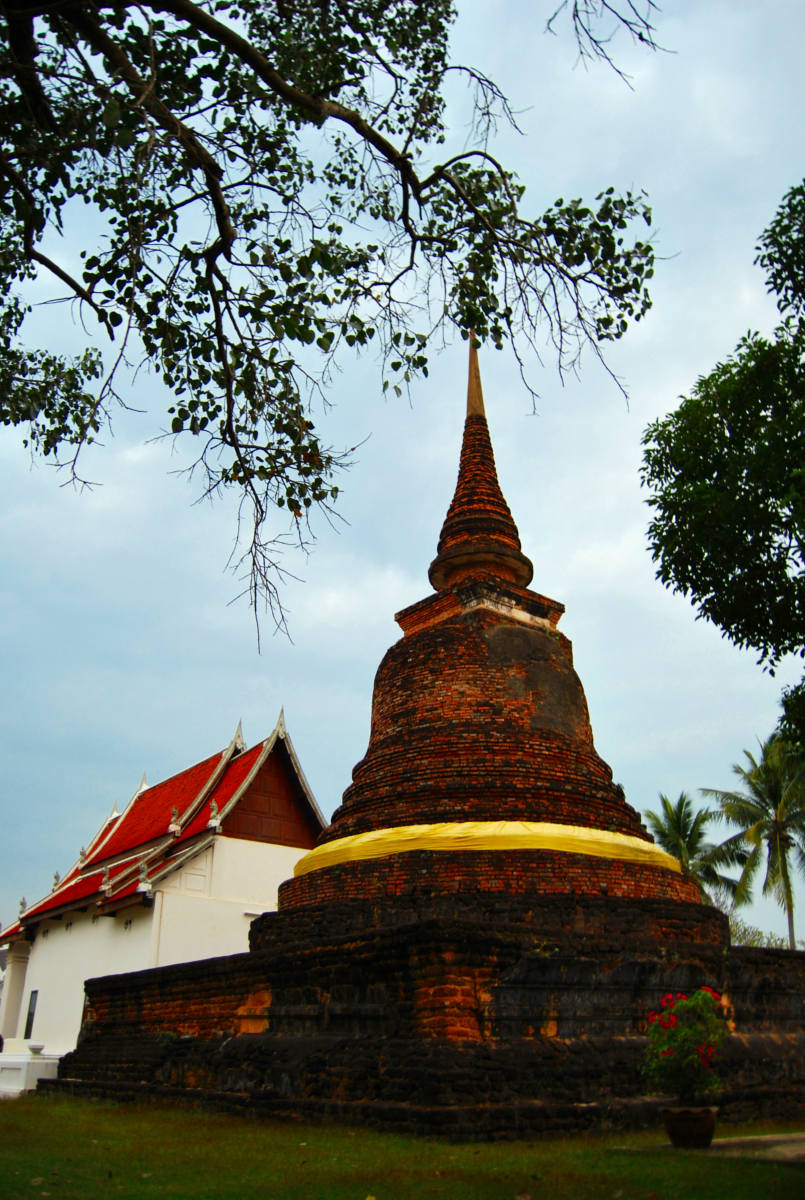

The post Wat Trapang Thong appeared first on Backpackers Bay.
]]>The post Wat Saphan Hin appeared first on Backpackers Bay.
]]>